


To strengthen field-based biodiversity conservation, the Center for Technology and Nature Conservation (CTNC) has established a Community Patrol Team (CPT) in Hoc Chim, Ninh Hoa – Van Ninh, Khanh Hoa Province. The team has been trained and equipped with the skills needed to work alongside professional forest protection officers in forest patrols, biodiversity monitoring, and wildlife snare removal.

Building a Community Patrol Team to Support Forest Protection
Forest ecosystems are facing increasing pressures from human activities and other threats that can affect wildlife populations. Strengthening field-based monitoring and protection therefore plays an important role in safeguarding biodiversity and maintaining healthy forest ecosystems.
CTNC established the Ninh Hoa – Van Ninh Community Patrol Team (CPT) to develop a community-based conservation force that connects local residents with forest protection and biodiversity monitoring activities. Six local community members were selected to join the CPT, signed contracts and commitments, and received the necessary training before beginning their patrol activities.
Key Responsibilities of the Community Patrol Team
The CPT is responsible for:
- Conducting forest patrols in coordination with professional forest protection officers to detect and prevent violations of forest protection regulations;
- Searching for, detecting, and removing wildlife traps and snares within the managed forest area;
- Documenting wildlife through direct observations, photographs, tracks, feeding signs, and other field evidence;
- Collecting information on species occurrence, particularly threatened, rare, and endangered species;
- Using SMART Mobile to record, manage, and report patrol data.

Using SMART Mobile for Biodiversity Monitoring
In addition to patrol and wildlife sign identification skills, CPT members were trained to use SMART Mobile to standardize field data collection, update field observations, and support long-term monitoring.
Through SMART Mobile, information on patrol routes, wildlife signs, threats, and other field observations can be systematically recorded and managed. Combining the field experience of patrol members, community participation, and technology strengthens the ability to detect threats to wildlife while generating valuable data to support conservation management and the development of effective conservation measures.
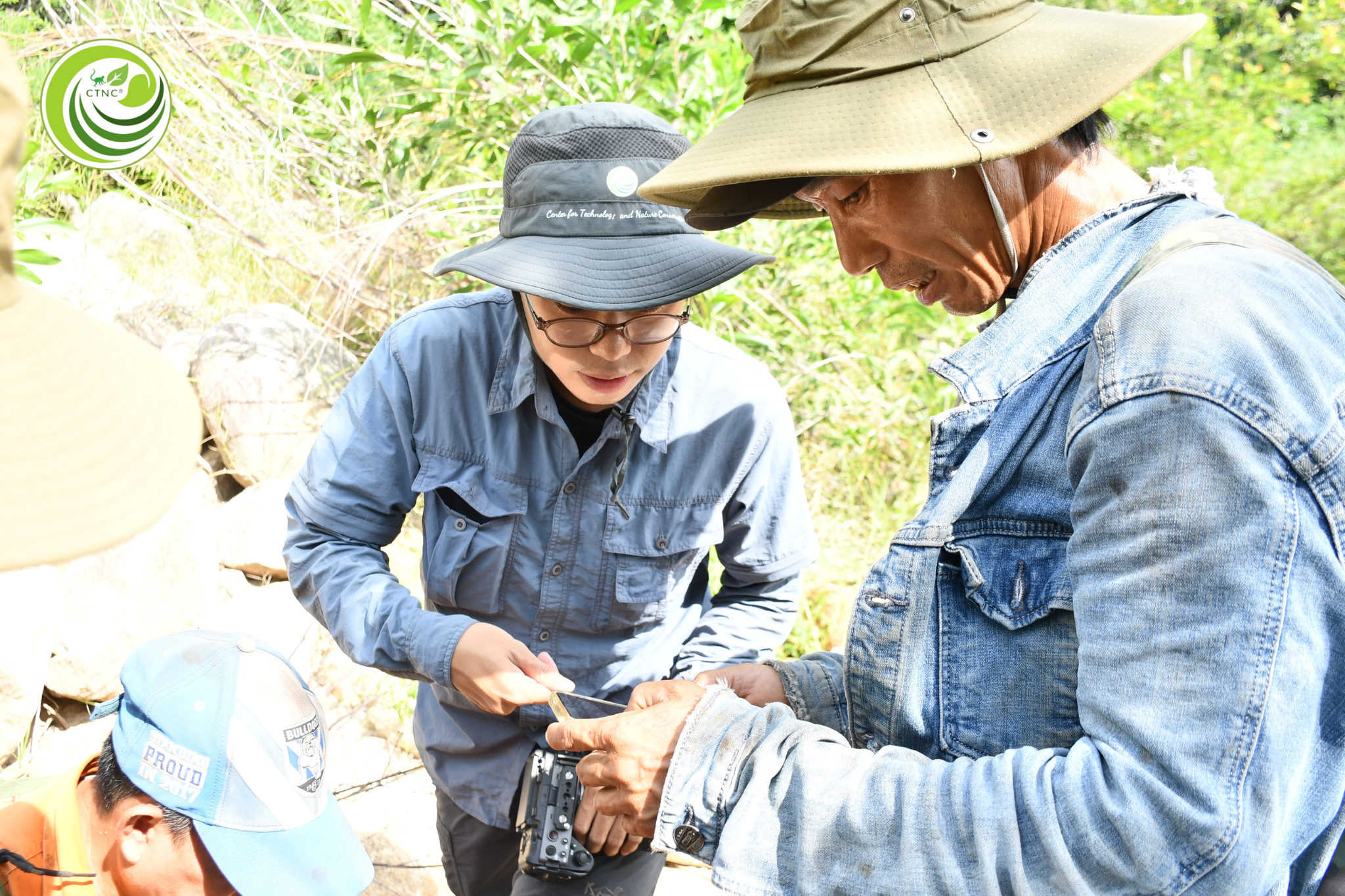
The First Community Patrol in Hoc Chim
Immediately after completing their SMART Mobile training, the CPT members embarked on their first patrol in Hoc Chim from 25–26 July. Working alongside professional forest protection officers, the six-member team completed a two-day, one-night patrol covering approximately 30 km of forest terrain, reaching an elevation of nearly 900 m, and including a night survey.
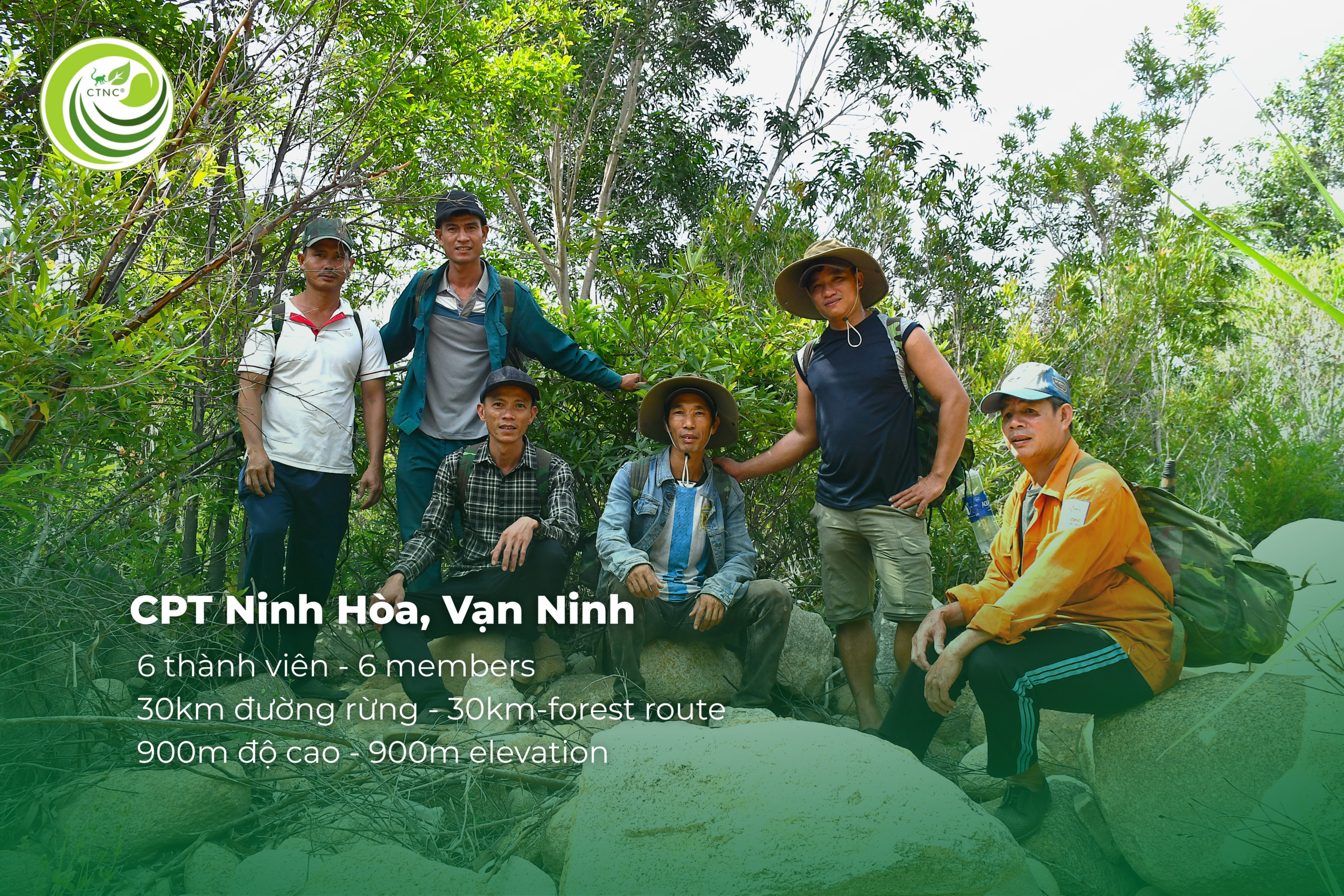
The patrol took place under challenging field conditions. Heavy rain lasting nearly two hours made the already steep slopes increasingly slippery and muddy, while dense sections of forest had little to no established trail. In some areas, the team had to use both hands and feet to grip trees and the ground as they navigated the difficult terrain. Leeches were also common along the route, while streams became fast-flowing and potentially dangerous following the rain.
Despite these challenges, the team remained actively engaged in their patrol duties, carefully searching for wildlife and signs of wildlife activity while practising data collection using SMART Mobile.
First Wildlife Records from the Patrol
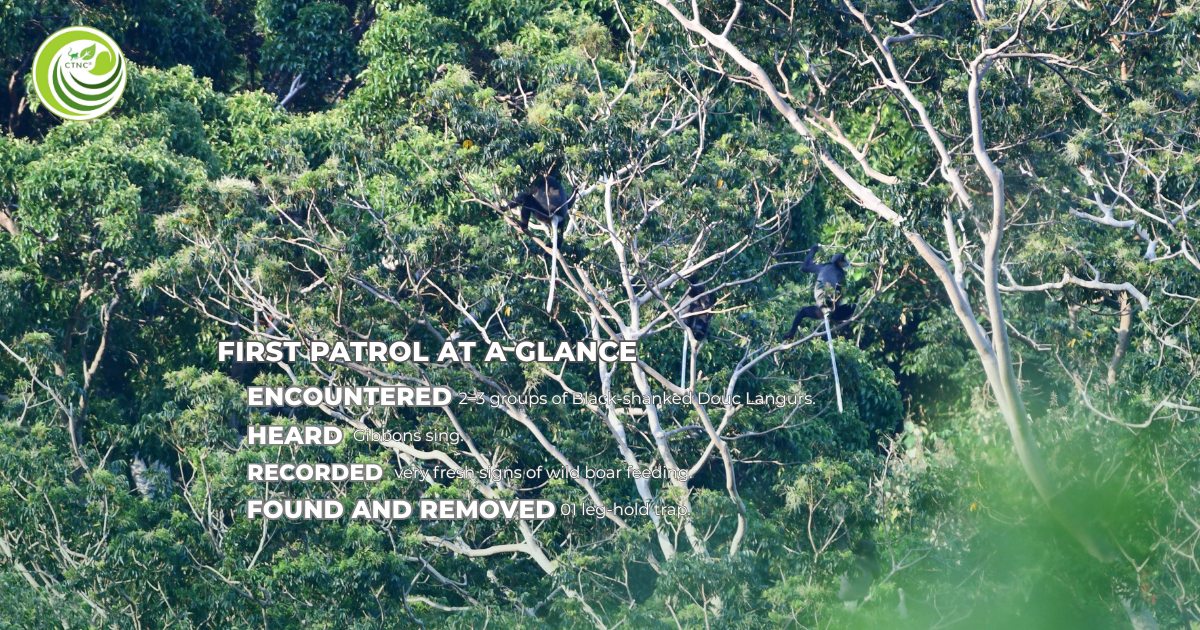
The first patrol resulted in several notable wildlife observations. The team recorded approximately 2–3 groups of Black-shanked Douc Langurs, heard gibbon calls echoing through the forest canopy, and documented fresh wild boar feeding signs.
These observations not only provided information on wildlife presence in the area but also gave the new patrol members valuable opportunities to strengthen their skills in identifying and documenting wildlife signs in the field.
One particularly important finding was a leg-hold trap, which was also the only trap detected during the entire field mission. The trap was photographed, GPS-located, recorded using SMART Mobile, and removed, eliminating a direct threat to wildlife in the area.
Local Residents Taking Their First Steps in Conservation
For the CPT members, the observations made during the patrol were more than data for a report; they also brought a genuine sense of excitement. Mr. Muoi, one of the patrol members, shared: “I’m very happy when we find douc langurs.”
His words reflect the growing connection the members are developing with both the patrol work and the wildlife living in the forest. According to the team, if they completed an entire patrol without recording any wildlife or wildlife signs, they would feel disappointed and sometimes have little to say to one another. For them, every sign of wildlife has become something worth looking for and celebrating.
The first field mission also provided an opportunity for the members to further develop essential skills, from using SMART Mobile and identifying wildlife signs to moving safely and working effectively in challenging forest terrain. While there are still skills to strengthen during future patrols, the enthusiasm, energy, and commitment demonstrated by all six members provide a strong foundation for the CPT’s continued activities.
A Commitment to Protecting Nature
Each CPT member has committed not to participate in or facilitate hunting, trapping, or other activities that could negatively affect wildlife. They have also committed to actively supporting forest protection and maintaining safe habitats for wildlife. In addition, members are responsible for maintaining the confidentiality of patrol data and information on the locations of threatened, rare, and endangered species recorded during field activities.
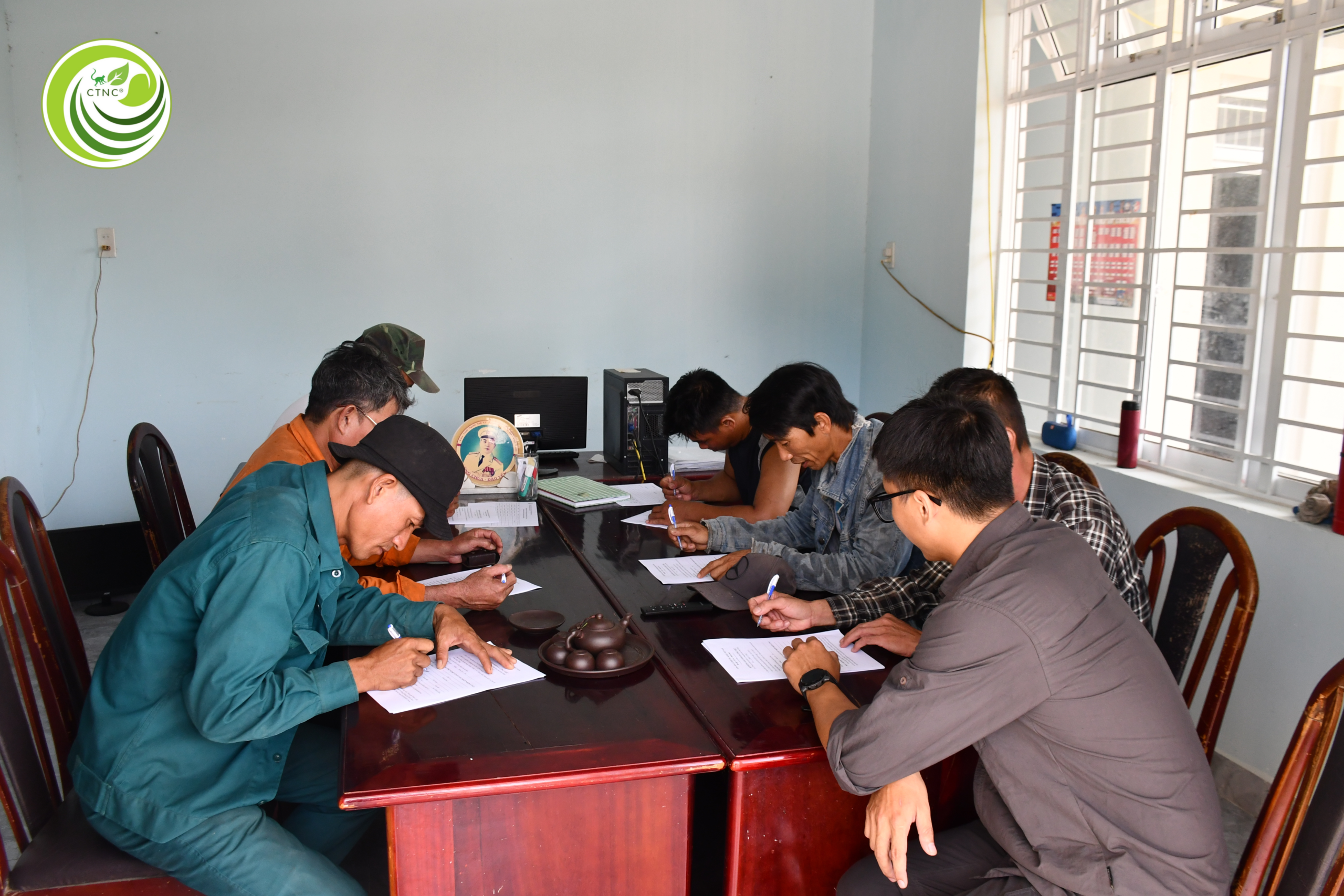
The establishment of the Ninh Hoa – Van Ninh Community Patrol Team (CPT) represents an important step in CTNC’s community-based conservation approach. By bringing together local community members, professional forest protection officers, field patrol activities, and technology, the CPT is expected to become an effective supporting force in identifying and reducing threats to wildlife, while contributing to biodiversity monitoring and forest ecosystem protection in Ninh Hoa – Van Ninh.