


On March 7, 2026, with permission from the People’s Committee of Ea Knop Commune, the Center for Nature Conservation and Technology (CTNC) collaborated with the Management Board of Ea So Nature Reserve to successfully organize a cultural, artistic, and sports festival titled “The Call of Spring in Ea So.” This event forms part of a long-term strategy to encourage active community participation in forest protection and wildlife conservation in Dak Lak Province.
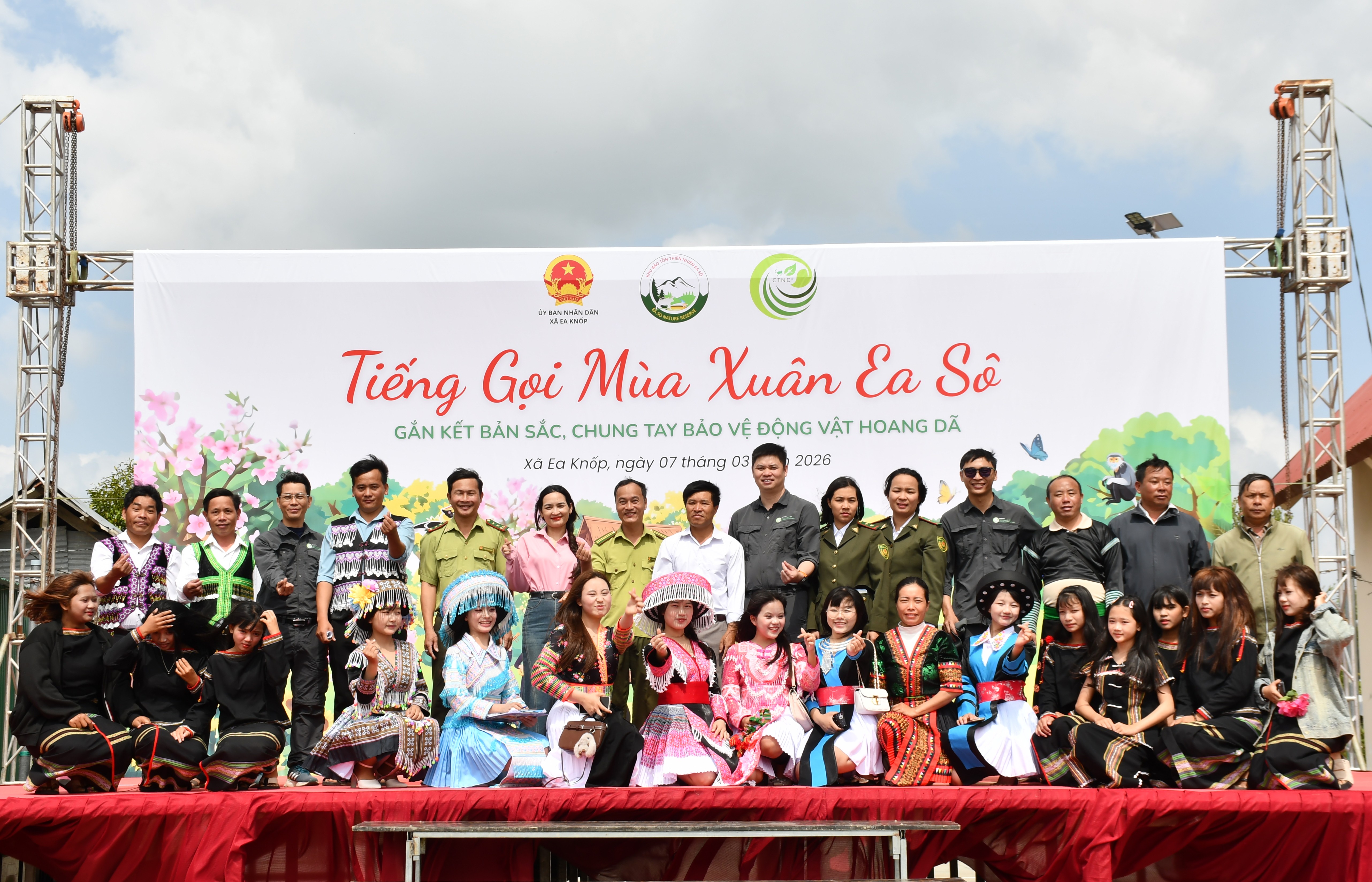
The area surrounding the Ea Sô Nature Reserve is a melting pot of migrant communities from the northern mountainous regions to the Central Highlands, including the Thái, Mường, Tày, Mông, and Dao ethnic groups. Over decades of settlement, traditional cultural values—once the sacred bond between humans and nature—have gradually faded over time. CTNC recognizes that restoring these values not only preserves ancestral identity but is also the key to building pride, thereby enhancing the local people’s self-responsibility toward the ecosystem.
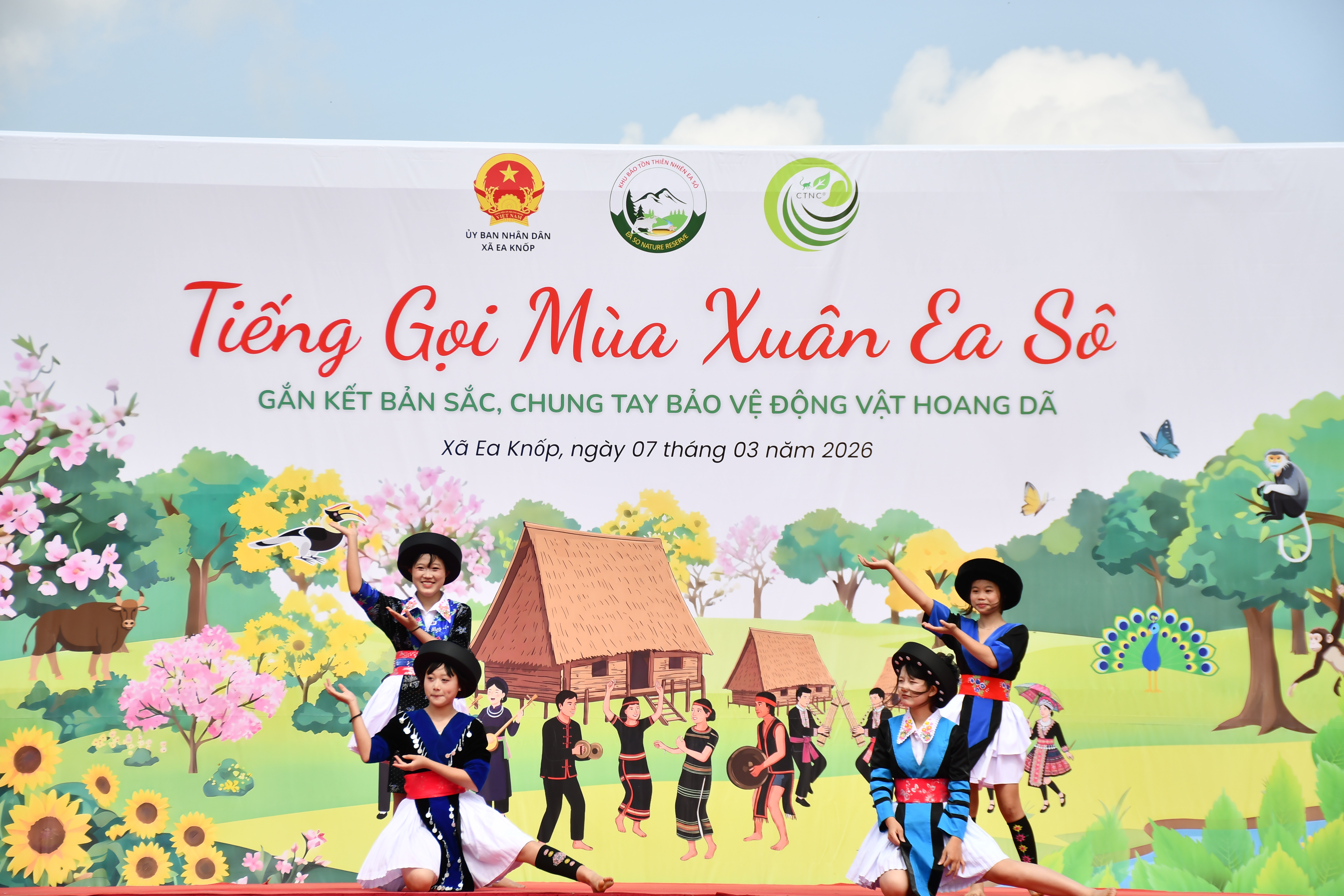
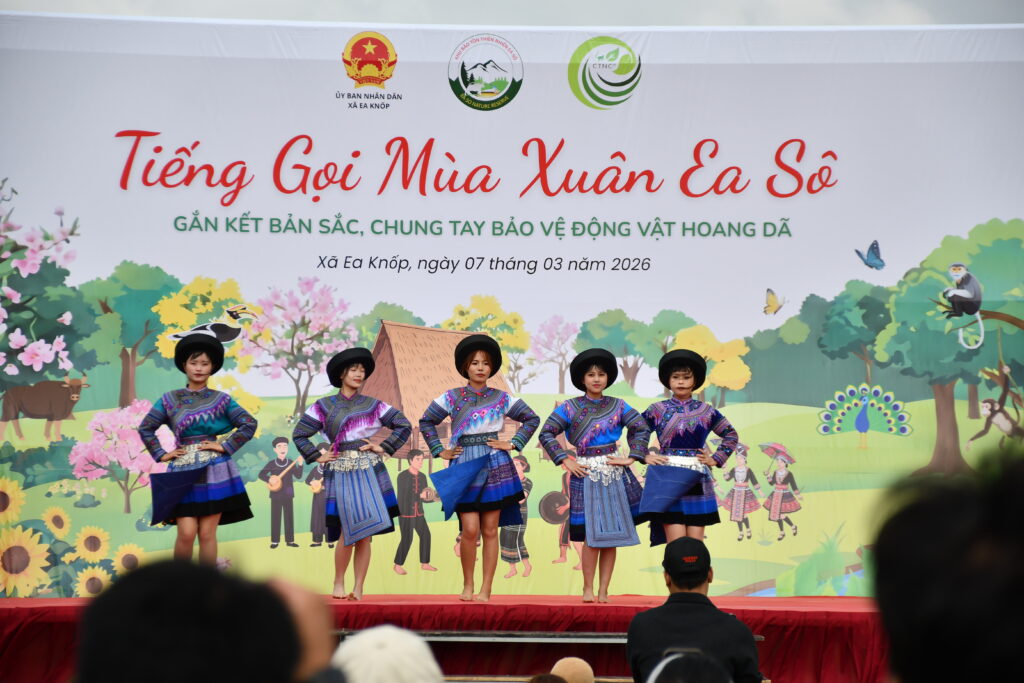
From early morning, the vast forest was filled with the vibrant sounds of the festival. More than 500 residents from Giang Đông, Ea Púk, and Cư Ana Săn villages gathered to recreate the beauty of their heritage through emotional, self-composed art performances. Dances like “Boys and Girls Welcoming Spring” or “Harvest Festival Joy,” blended with the melodious sounds of the Mông flute, not only evoked national pride but also created a unique cultural intersection in the heart of the Central Highlands.
Continuing the spirit of connection, traditional sporting activities in the afternoon brought the festive atmosphere to a climax. Fierce stick-pushing matches, skillful spinning top displays, and the enthusiastic cheers during the tug-of-war competition dissolved all distances.
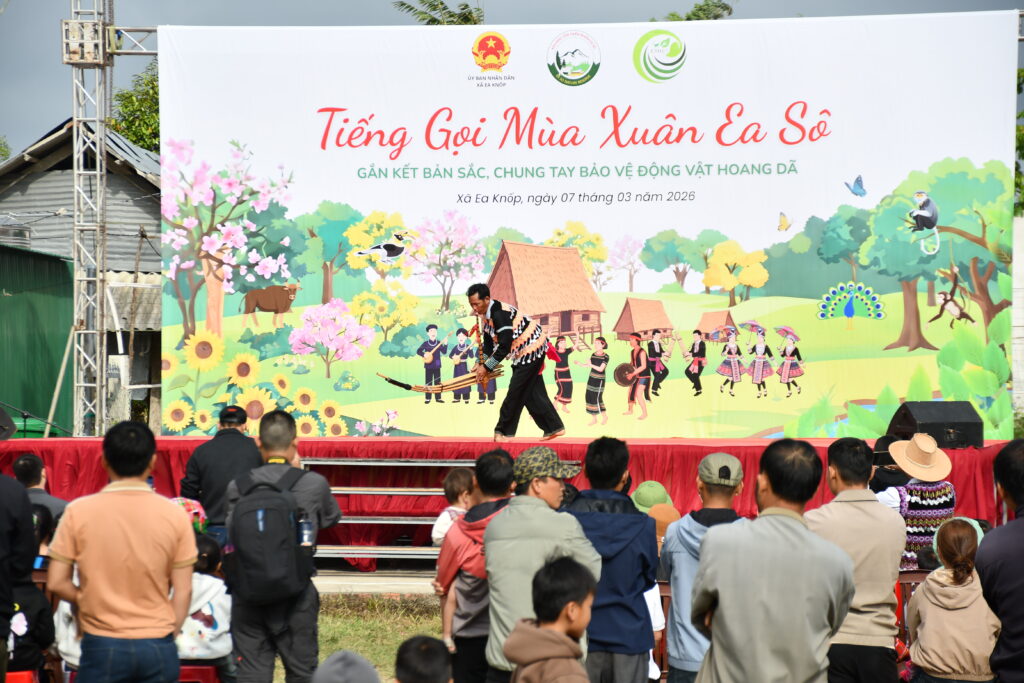
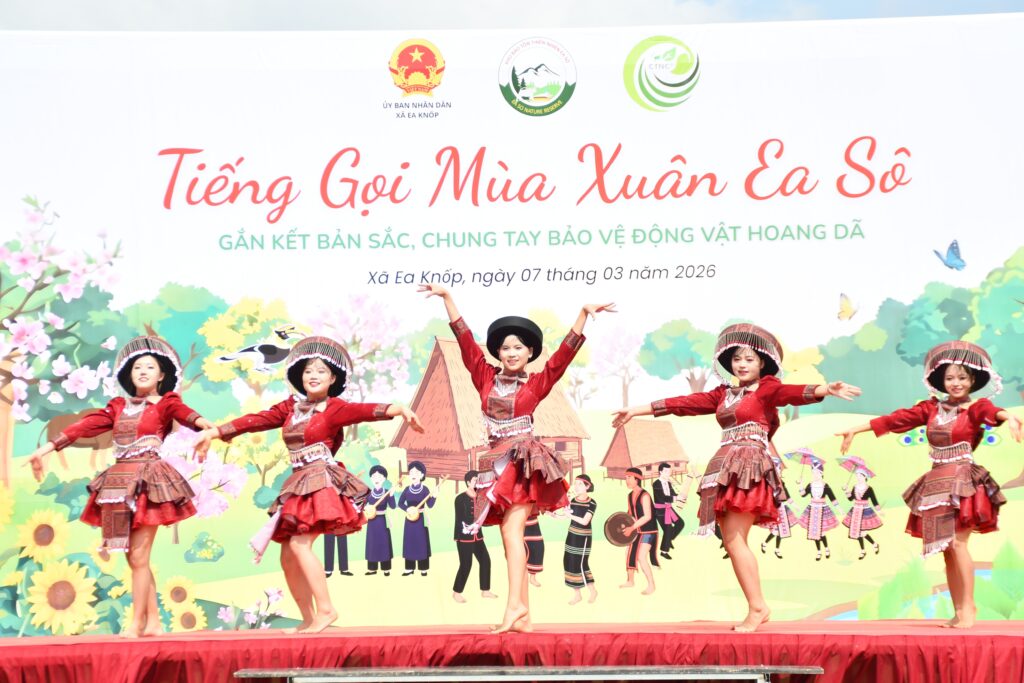
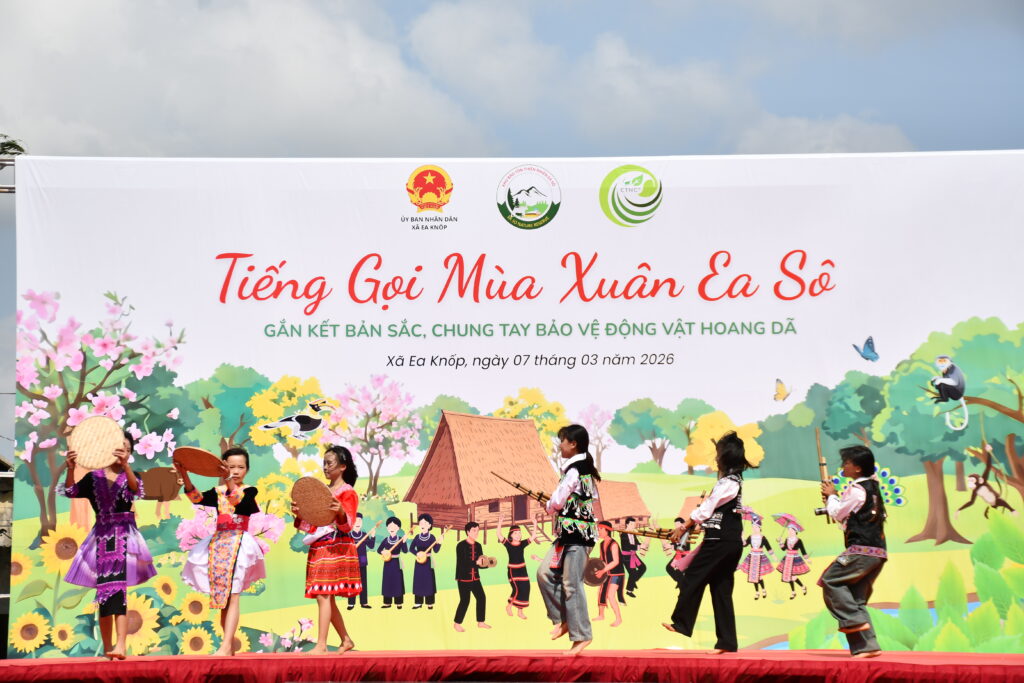
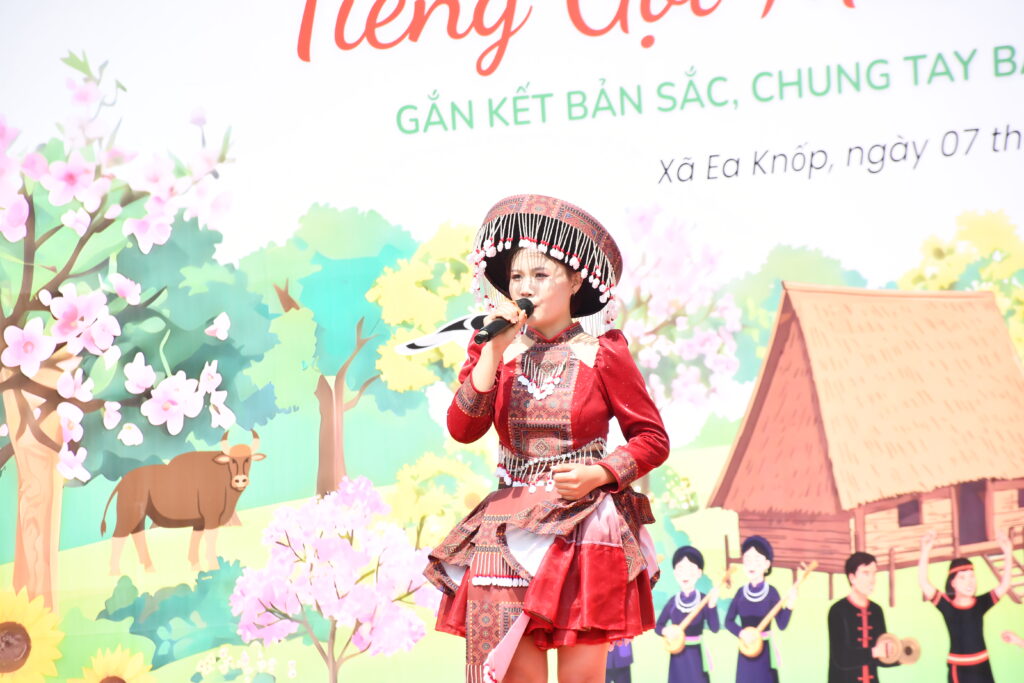
Amidst this cultural flow, CTNC skillfully integrated environmental education through a Q&A session about wildlife. The enthusiasm of the villagers when answering questions about nature conservation proved that forest protection knowledge, when conveyed through cultural language, becomes more relatable and accessible than ever.
Mr. Nguyễn Quốc Hùng, Deputy Director of the Ea Sô Nature Reserve Management Board, stated: “For those working in forest management and protection, having more than 500 participants grasp information about forest preservation and rare animals at the Ea Sô Nature Reserve is of great significance for communication efforts. The format of cultural and sporting exchanges helps people easily access information and raise awareness about forest management and protection. People will understand that as long as the forest remains, their cultural activities and festivals will endure.”
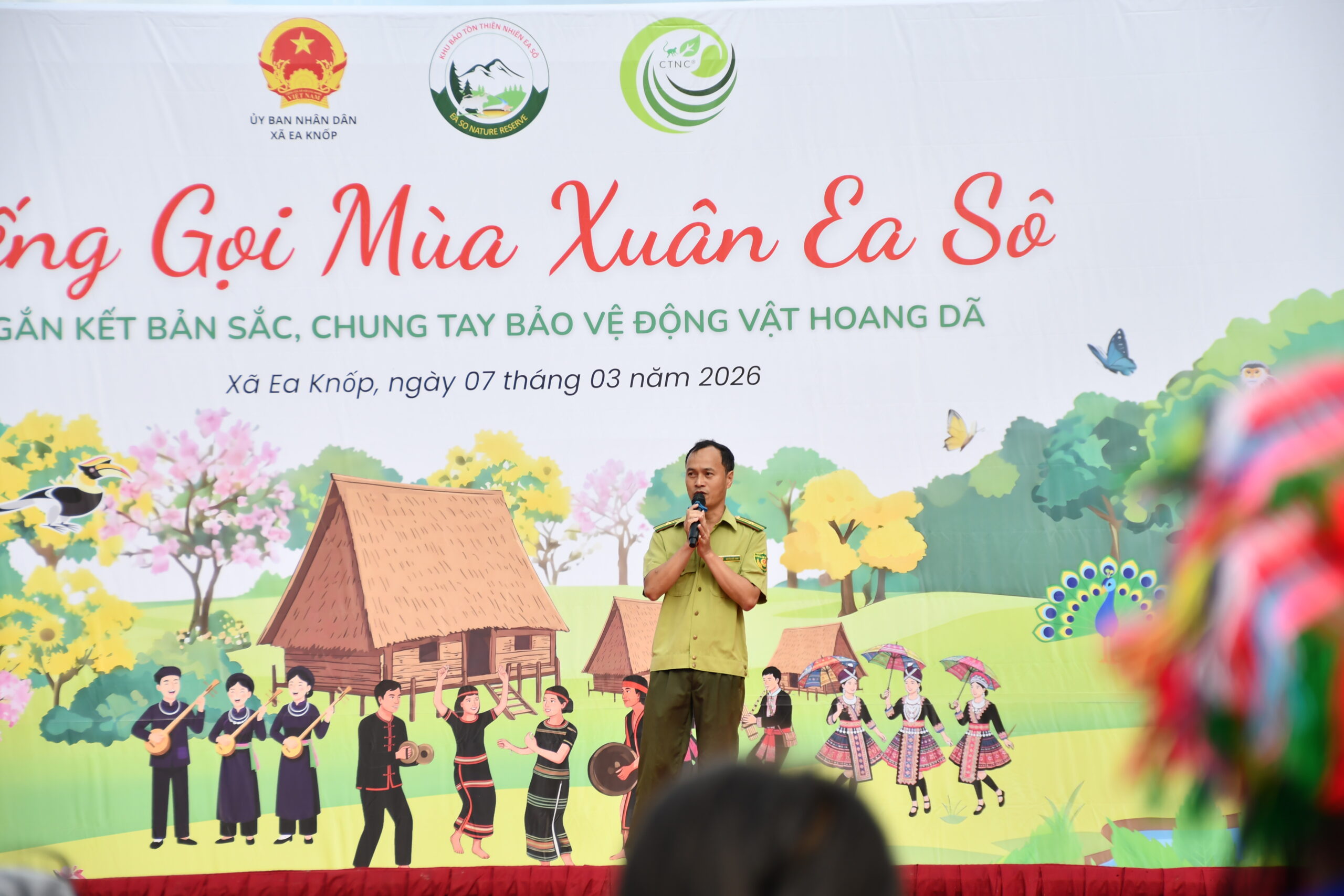
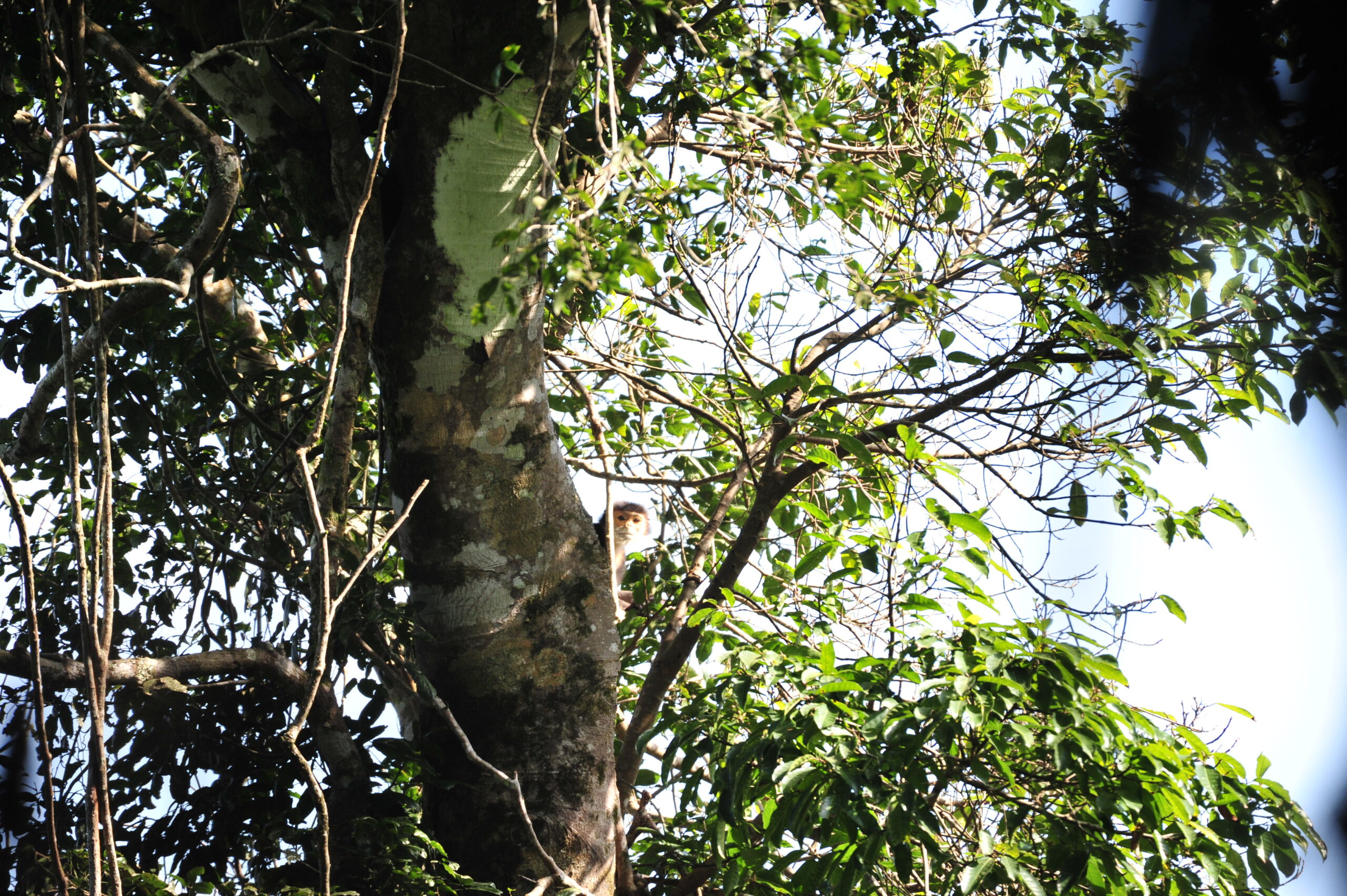
Through recent surveys, the Center for Technology and Nature Conservation (CTNC) discovered the presence of a population of black-shanked douc langurs (Pygathrix nigripes) in the Ea Sô area—a new record never previously reported in this reserve. This discovery highlights the particularly important biodiversity value of the Ea Sô forest ecosystem and opens new opportunities for research and the conservation of rare primates in the region.
According to Mr. Lê Minh Tiến, Director of the Ea Sô Nature Reserve Management Board: “Ea Sô Nature Reserve is one of the few reserves in Vietnam that still preserves a rare natural grassland ecosystem. It has recorded many rare animal species such as gaur, green peafowl, silver-backed chevrotain, grey peacock-pheasant, lesser fish-eagle, and many other wildlife species with high conservation value. Notably, this is also home to the only remaining population of wild water buffalo recorded in Vietnam.”
However, because the reserve covers over 26,000 hectares and has relatively flat terrain, forest management and protection face many difficulties. Poachers often exploit the terrain to infiltrate the forest using various methods to hunt and trap wildlife. Meanwhile, the Management Board’s forest protection force is quite thin, making patrol and control work very challenging. Therefore, it requires the joint efforts of local authorities, the entire political system, the community, and other conservation organizations to limit and eventually control this issue.
Recently, the support and commitment to coordination between the Ea Sô Nature Reserve Management Board and the Center for Technology and Nature Conservation (CTNC) have actively contributed to raising community awareness and promoting the development of community-based forest and wildlife protection models, thereby strengthening the participation of local people in nature conservation.”
Most precious of all is the enthusiastic and sincere spirit of the local people. Not only the youth but also many elders were deeply moved and excited to see the folk games from their childhood vividly recreated in the land of Ea Sô. This excitement and the radiant smiles came not only from the joy of winning the games but also from the feeling of being respected and heard within a united community.
Ms. Hờ Thị Hương from Ea Knốp Commune said: “I found the program very interesting and meaningful. People not only got to enjoy art performances but also updated their knowledge and improved their awareness and responsibility for forest preservation and joining hands to protect wildlife.”
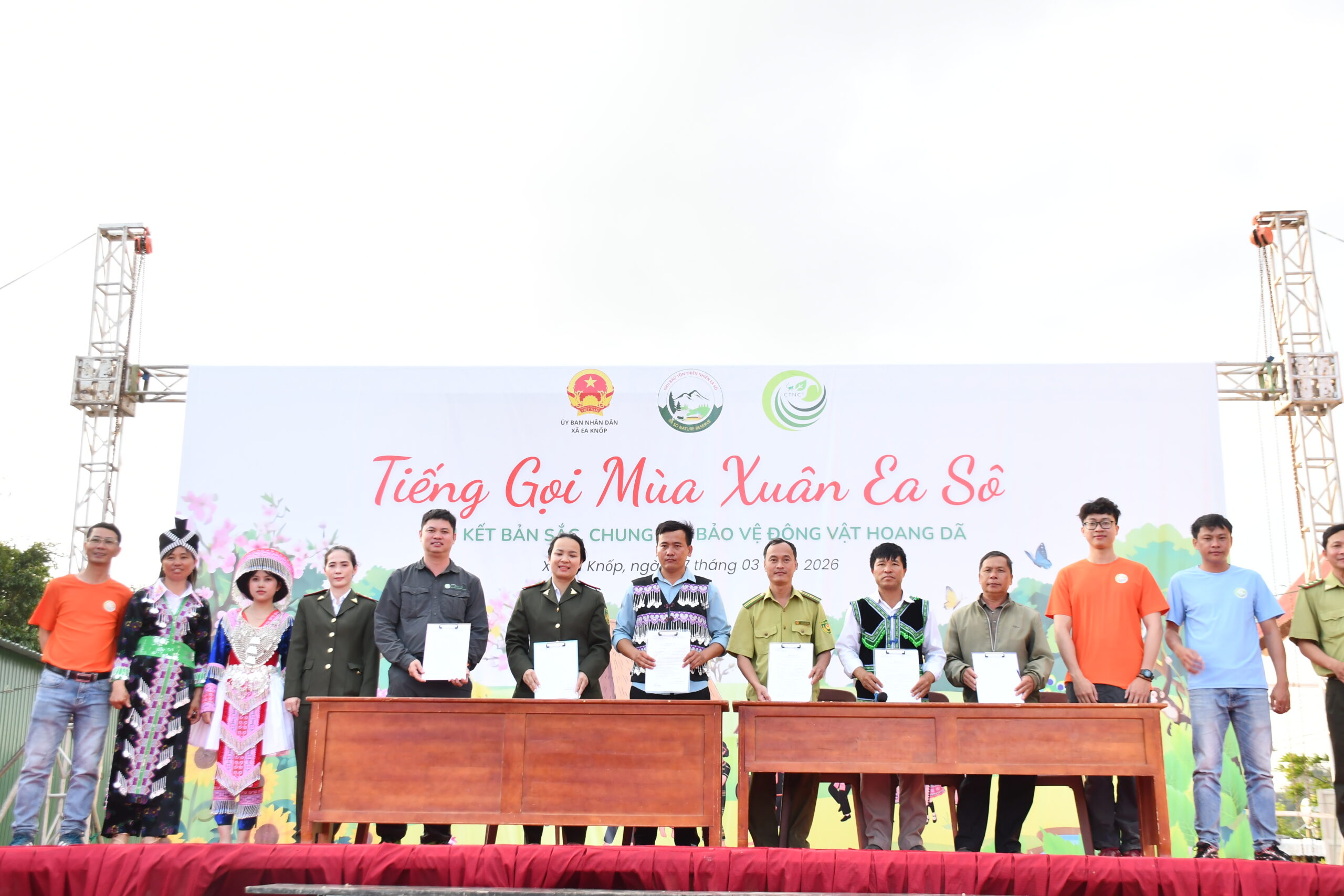
The strategic highlight and core objective of the event was the formal Signing Ceremony of the Forest and Wildlife Protection Agreement, held right at the festival. Participants included representatives from the Ea Sô Nature Reserve, the Ea Kar Forest Protection Department, CTNC, village authorities, the Women’s Union, and the Youth Union. This agreement is a strong commitment to incorporating nature protection rules into the community’s conventions and regulations. The trust and consensus shown through each signature of the village heads, secretaries, and union representatives are evidence of the positive shift in the people’s awareness.
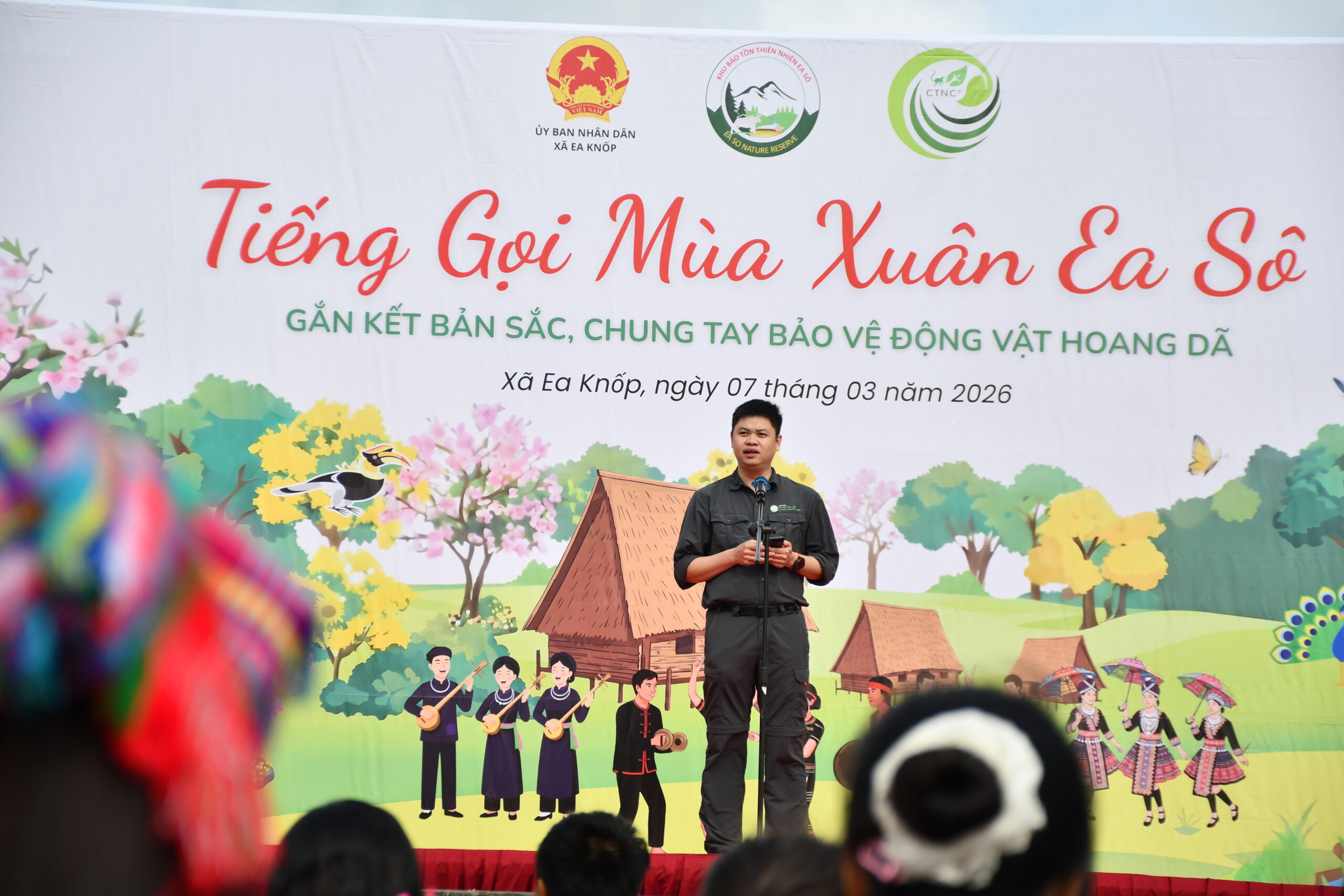
Mr. Phùng Ngọc Khanh, Director of the Center for Technology and Nature Conservation (CTNC), stated:
“The restoration of ‘The Spring Call of Ea Sô’ festival is not merely about reviving a lost festival of the Northern migrant community in the Central Highlands; it also creates a special cultural bridge between two distinct cultural regions of Vietnam: the Central Highlands and the Northwest. The festival contributes to strengthening community cohesion and solidifying the spirit of solidarity among the ethnic groups living locally. At the same time, this is an opportunity for CTNC to inspire the community’s collective spirit in protecting forests and wildlife. Ea Sô Nature Reserve is one of the forests with high biodiversity value in Vietnam, so the participation and consensus of local people play a particularly important role in conservation.”
Mr. Khanh also reaffirmed CTNC’s operational philosophy: “Nature conservation cannot be separated from the development and preservation of community culture. We believe that when pride in cultural identity is nurtured, and the emotions and responsibilities of each citizen are awakened, the forest and wildlife will be protected sustainably by the powerful inner strength of the people who are attached to this land.”